

Chief Instructor
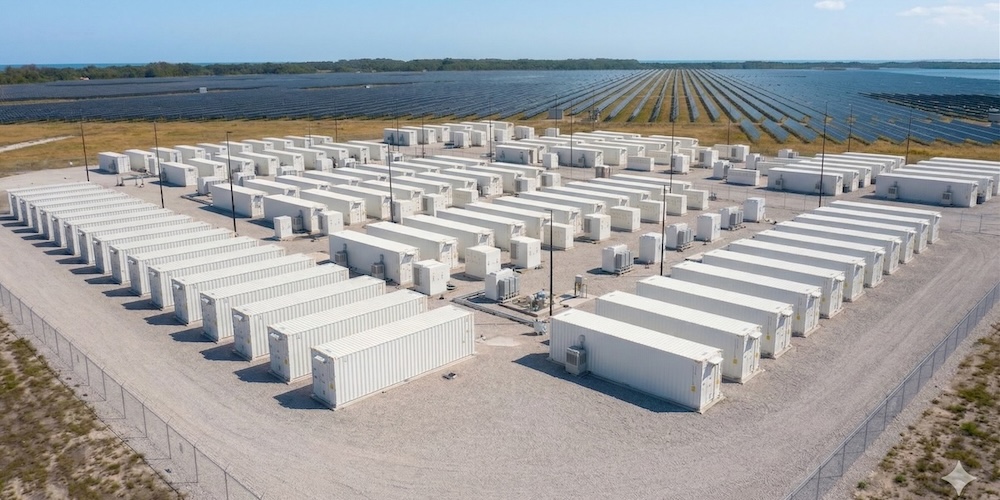
This professional training programme provides practical knowledge and industry-relevant skills designed to support you in developing your capabilities and preparing you for opportunities within Saudi Arabia’s evolving workforce, in the domain of BESS and Solar PV projects.
Successful learners receive a certificate upon completing the required course components and assessment.
Covers the engineering planning that comes before any Battery Energy Storage System (BESS) install. Learners look at load pattern types, analyse existing electrical networks, and calculate on-grid and off-grid loads. They finish able to estimate current demand and forecast future energy needs.
Introduces the main solar-plus-storage system architectures. Learners compare Alternating Current (AC) coupling and Direct Current (DC) coupling, weigh the pros and cons of each, and select the right equipment for both. The module ends with justifying a coupling choice for a given application.
Focuses on the battery itself. Learners compare chemistries, recognise standard cell formats, and apply key terms such as Depth of Discharge (DoD), State of Charge (SoC), C-Rate, cycle life and thermal runaway. They then read manufacturer datasheets, design series and parallel string configurations, specify mounting, and calculate backup hours for a set load.
Deals with the power electronics and control systems. Learners cover the bi-directional Power Conversion Unit (PCU) and the grid-tied solar inverter, learning to select, size and rate each from datasheet parameters. The module also explains the Energy Management System (EMS) and the Battery Management System (BMS), including how the BMS talks to the PCU.
Brings in the wider system around the battery and inverter, known as the Balance of System (BoS). Learners size inverter duty transformers, work out container size and ventilation, select distribution boards and switchgear, size DC and AC cables, and apply earthing principles. They also choose between string and central inverter setups and describe high-tension (HT, meaning high-voltage) side protection.
Goes deep on cable selection and sizing for a BESS. Learners apply the selection criteria for DC and AC cables, size cables for battery-to-PCU and photovoltaic (PV) to inverter circuits, and calculate voltage drop against permitted limits. They also work with cable impedance, run a short-circuit temperature rise check, and apply derating factors for real site conditions.
Concentrates on earthing. Learners explain the purpose of earthing and the difference between system and equipment earthing, identify earthing arrangements and calculation methods, and weigh the factors behind earthed versus unearthed systems. They finish able to apply resistance-to-earth concepts and select earthing conductors and electrode connections for a BESS.
Covers electrical protection. Learners explain why protection matters, identify the protection schemes used in BESS installs, and perform fault current and short-circuit calculations. They apply protection coordination and discrimination, then design a complete scheme covering both DC-side and AC-side requirements.
Focuses on switchgear and transformers. Learners define switchgear and its role, identify the switchgear schemes used in BESS, and apply the key ratings for selection and sizing. They also select and size transformers, including inverter duty transformers, and coordinate these choices with the protection design.
Deals with the container and its thermal management. Learners size a BESS container for the battery, equipment and access, and explain container ventilation. They cover Heating, Ventilation and Air Conditioning (HVAC) design principles, calculate the cooling load the system must remove, and specify environmental controls, linking thermal design to battery life and safety.
Turns the design into documentation. Learners explain the role of engineering drawings, then prepare Single-Line Diagrams (SLDs) for the BESS, AC and DC sides. They also produce container layout and location plans, earthing layouts and cable layouts, and see how the full drawing set fits together.
The closing assessment. Learners review the key areas through a multiple-choice exam and complete the required practical assessment activities.
Entry requirements depend on the individual training programme and its level. Any required qualifications, previous experience or prior knowledge will be clearly provided with the course information.
This programme is suitable for learners, professionals and organisations looking to develop relevant knowledge and practical skills within the selected training sector.
Training may be delivered online, in person or through a blended format, depending on the course and training provider.
Assessment is conducted with an online knowledge exam and concludes with a practical assessment.
We're building an intelligent tool to assess your skills and recommend the perfect training path.
Contact Us